


Pinterest is often misunderstood.
Some see it as just another social platform. Others post a few pins, wait for results, and assume it does not work.
In reality, Pinterest is a visual search engine with long content lifespan and high buying intent. If you approach it with the right strategy, it can drive steady traffic, leads, and sales over time.
According to reports, Pinterest has over 600 million monthly active users worldwide.
Even more important, Pinterest has shared through Pinterest Business insights that a large portion of users come to the platform to plan purchases and discover new brands.
This is what makes Pinterest marketing strategies different from typical social media tactics.
In this guide, we will break down:
- Core Pinterest marketing strategies
- Pinterest growth strategies for long-term visibility
- Traffic and conversion methods
- Practical examples
- How automation fits responsibly into your workflow
Let’s start from the foundation.
Pinterest marketing works when you treat the platform like a search engine, not a social feed.
To grow consistently:
- Do proper keyword research using Pinterest search
- Create multiple pin variations for the same content
- Use clear vertical designs (2:3 ratio)
- Post consistently instead of in bulk bursts
- Optimize your profile and board titles
- Add the “Pin It” button to your website
- Build a funnel (Pin → Content → Email → Offer)
- Track analytics and double down on what works
1. Treat Pinterest Like a Search Engine
One of the biggest mistakes businesses make is treating Pinterest like Instagram.
Pinterest runs on search intent.
When someone types:
- “Small kitchen storage ideas”
- “Fall outfit ideas for women”
- “Beginner budget planner template”
They are actively looking for solutions.
Your Pinterest marketing strategy should begin with keyword research.
How to Do It?
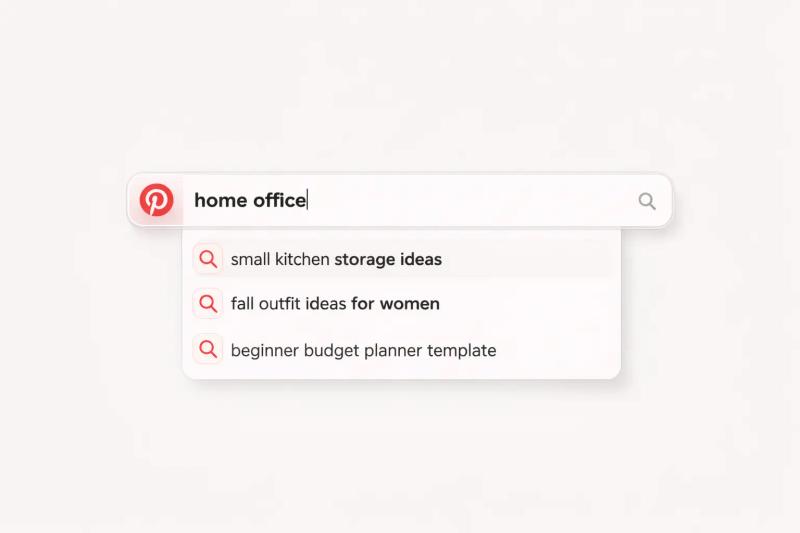
Start typing your main topic into the Pinterest search bar. Look at the auto-suggestions. These are real search queries.
For example:
Typing “home office” may show:
- home office small space
- home office decor ideas
- home office desk setup
These are valuable phrases.
Use them naturally in:
- Pin titles
- Descriptions
- Board names
This is the foundation of Pinterest SEO.
Example: Primary + Secondary Keywords in Action
Now look at the screenshot example from Anastasia Blogger.
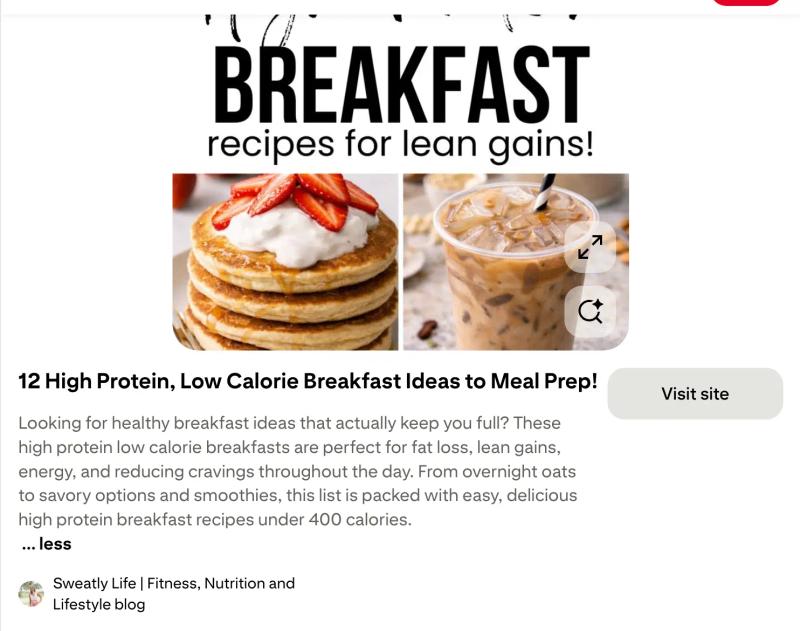
In the image, the primary keyword she is targeting is:
“weight loss recipes”
You can see it clearly used in the title:
“9 Easy Weight Loss Recipes You Need Now”
But she does not stop there.
Inside the description, she also includes related secondary phrases such as:
- healthy recipes
- clean eating
- vegetarian-friendly
- breakfast, lunch, and dinner recipes
These are not random words. They are related search terms that expand the reach of the pin.
2. Create Multiple Pins for the Same Content
Pinterest rewards freshness. That does not mean you need new blog posts every day. It means you should present the same content from different angles.
Instead of creating one pin per blog post or product, create multiple variations.
For example:
Blog post: “10 Small Balcony Garden Ideas”
You could create pins like:
- Small Balcony Garden Ideas for Apartments
- Urban Balcony Gardening Tips
- Budget Balcony Plant Setup
Each version targets slightly different search intent. Someone searching for “budget balcony plants” may not search for “balcony garden ideas,” even though the content overlaps.
The difficulty is time. Designing multiple variations manually for every URL can be exhausting.
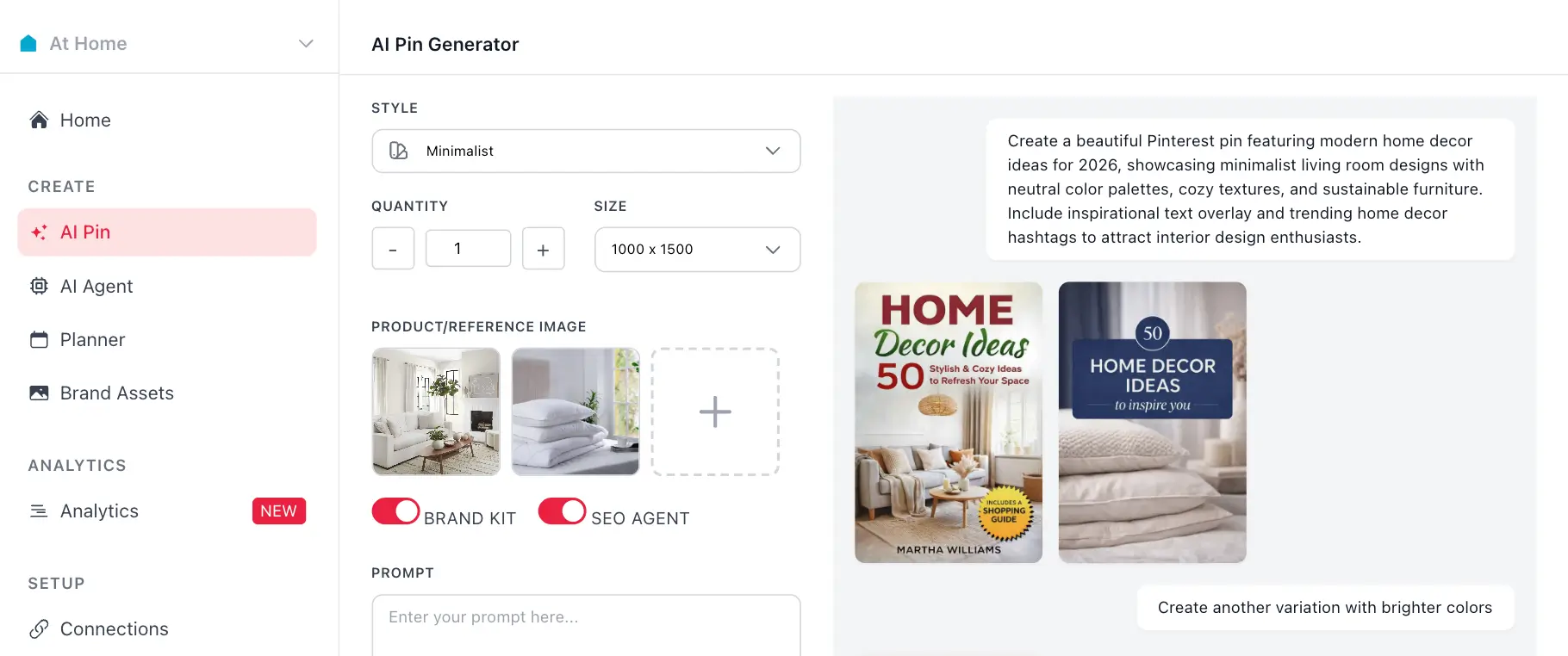
This is where tools like PinSumo AI can support the workflow.
You can paste a website URL and generate different pin variations automatically, then adjust styling to match your brand.
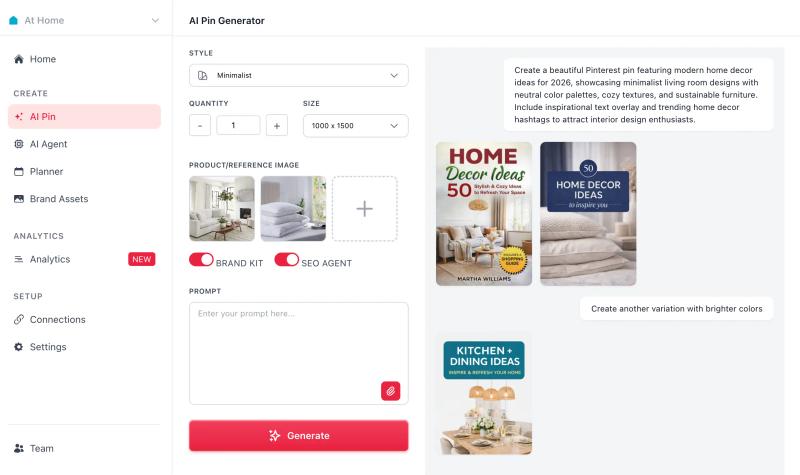
Instead of repeating the same design, you publish diversified visuals tied to the same content.
3. Focus on Vertical, Clear Designs
Pinterest recommends a 2:3 aspect ratio, typically 1000 x 1500 pixels.
Vertical pins take up more space in the feed, especially on mobile. More space means more attention.
If your design is horizontal or too small, it gets lost between other pins.
But size alone is not enough. Clarity matters just as much.
Here is what works consistently:
- Large, easy-to-read text
- Strong contrast between text and background
- Simple layouts with one clear message
- Clean images without clutter
4. Post Consistently, Not Aggressively
Pinterest growth strategies are based on steady momentum.
Large bursts of 100 pins in one hour can look unnatural. It may also reduce performance if engagement drops.
Instead:
- Publish gradually
- Space content across different days
- Maintain rhythm
Consistency signals to Pinterest that your account is active and reliable.
This is where workflow becomes important.
If you are manually creating every pin, it can become overwhelming. Many creators batch design content and schedule it gradually.
Platforms like PinSumo AI help automate pin creation from website content and distribute posts across different time slots using smart queuing.
Instead of flooding Pinterest with bulk uploads, content can be spaced naturally over days or weeks.
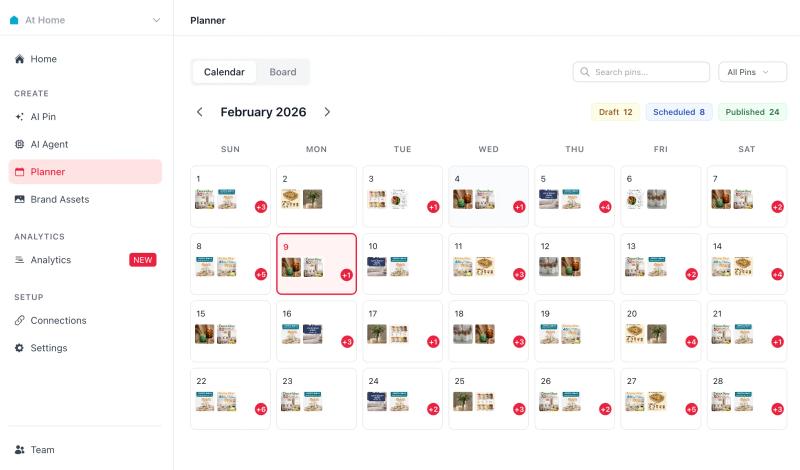
The goal is not to game the system. The goal is to avoid accidental spam patterns and maintain healthy publishing cadence.
5. Optimize Your Profile and Boards (And Use a Business Account)
Pinterest does not only rank individual pins. It also looks at your overall profile structure.
Your content is categorized partly based on:
- Profile name
- Bio
- Board titles
- Board descriptions
If your boards are vague, Pinterest has less context to understand what your account is about.
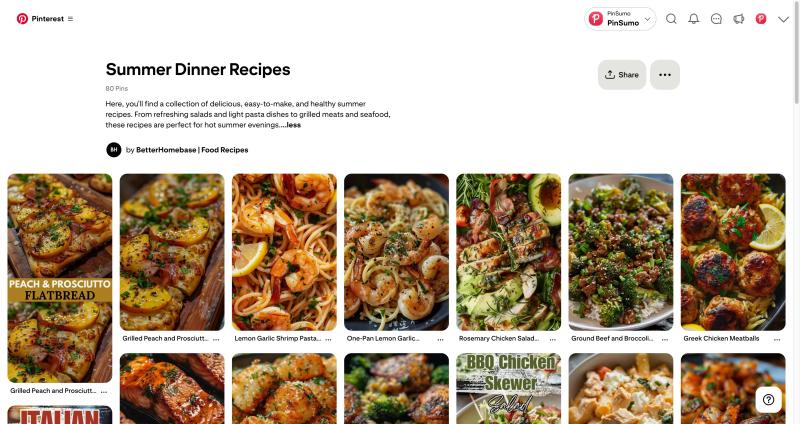
For example, instead of naming a board: “Inspiration”
Use something specific like: “Minimalist Bedroom Decor Ideas”
Or instead of: “My Favorites”
Use: “Healthy High Protein Dinner Recipes”
Specific board titles improve discoverability because they align with real search queries.
6. Drive Traffic to Optimized Landing Pages
Pinterest impressions are valuable, but traffic quality matters more.
If someone clicks your pin and lands on:
- A slow page
- A broken link
- A misleading offer
They leave immediately.
This lowers conversion rates and may reduce future engagement.
Make sure your landing pages:
- Load quickly
- Match the pin title
- Deliver what was promised
Pinterest users often have buying intent. Align your landing page with that intent.
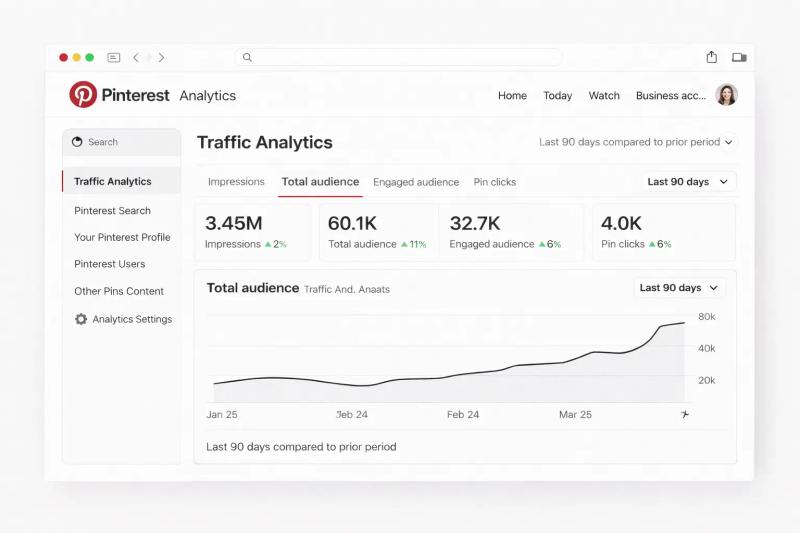
7. Use Pinterest Analytics to Refine Strategy
Pinterest Analytics (available with business accounts) shows:
- Impressions
- Saves
- Outbound clicks
- Top performing pins
Review:
- Which topics get the most clicks
- Which designs perform better
- Which boards drive traffic
Then double down.
Data driven Pinterest marketing is far more effective than guessing.


Generate pins with AI agent on autopilot
Create, schedule, and grow your Pinterest presence effortlessly with AI-powered automation.
Try GenSumo Free8. Add the “Pin It” Button to Your Website
If you are creating blog posts, product pages, or landing pages, do not rely only on yourself to distribute content.
Make it easy for your visitors to share it for you.
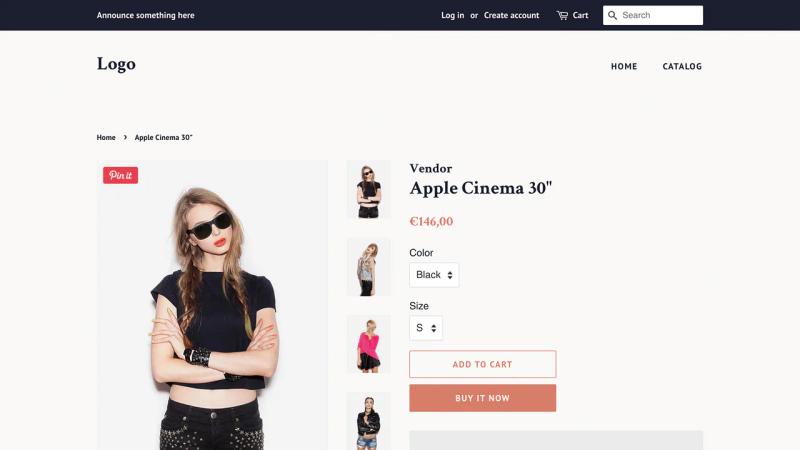
Adding a “Pin It” button to your website allows users to save your images directly to their own Pinterest boards.
This does two powerful things:
- It increases organic distribution
- It signals engagement to Pinterest
Every time someone saves your image from your website, it creates a new pin instance connected to your content. That expands reach beyond your own account.
9. Build a Conversion Funnel
Pinterest is top-of-funnel for many brands.
Effective funnel example:
Pin → Blog Post → Email Signup → Product Offer
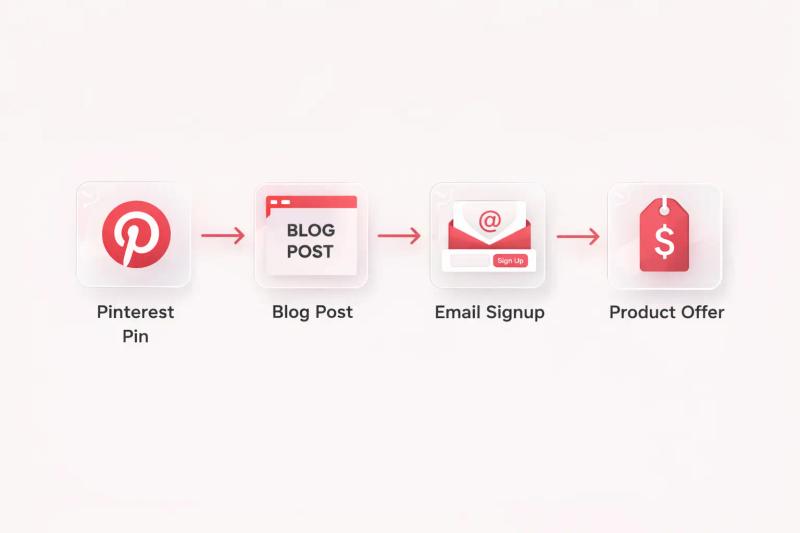
Instead of trying to sell immediately, capture emails and nurture.
Pinterest traffic compounds when paired with email marketing.
Final Thoughts
Pinterest marketing is not about chasing trends or posting endlessly.
It is about building a structured system.
When you treat Pinterest like a search engine, focus on keyword intent, design clear vertical pins, publish consistently, and optimize your profile, growth becomes predictable instead of random.
The platform rewards:
- Clarity over cleverness
- Consistency over bursts
- Relevance over volume
Over time, your pins compound. A single well-optimized pin can bring traffic months after it is published. That is what makes Pinterest different from most social platforms.
If you combine strong SEO fundamentals, multiple pin variations, steady scheduling, and a proper conversion funnel, Pinterest can become one of your most stable traffic channels.
Frequently Asked Questions
How long does it take to see results from Pinterest marketing?
Pinterest is not instant. Most accounts start seeing noticeable traction within 2 to 3 months of consistent posting and keyword optimization. Because Pinterest works like a search engine, growth compounds over time rather than spiking overnight.
How many pins should I post per day?
There is no perfect number. For most businesses, 3 to 10 high-quality pins per day spaced out consistently works well. It is better to publish steadily than to post 50 pins in one day and disappear for a week.
Do followers matter on Pinterest?
Followers help, but they are not the main driver of reach. Most impressions come from search results and related pins, not from followers. Keyword optimization and content relevance matter more than follower count.
What type of content performs best on Pinterest?
Content that solves a clear problem tends to perform best. Examples include:
- Step-by-step guides
- Checklists and templates
- Before and after visuals
- Product styling ideas
- Educational content
Pinterest users are planners, so actionable content works very well.
Should I focus on organic or paid Pinterest marketing?
Start with organic. Once you identify pins that get strong clicks and saves, you can amplify them using paid ads. Ads work best when you already know what converts.
Is Pinterest good for ecommerce?
Yes. Many Pinterest users come with purchase intent. Visual industries like home decor, fashion, beauty, printables, and digital products perform especially well. Optimized product pins combined with keyword research can drive consistent traffic.