


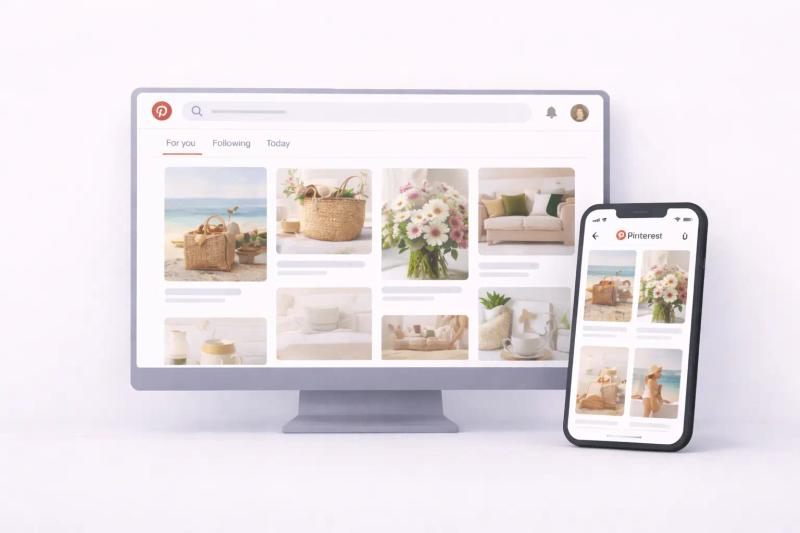
When people talk about social media platforms, names like Instagram, Facebook, and TikTok usually come up first. Pinterest often sits in a slightly different category.
So the question is simple:
Is Pinterest social media?
The short answer is yes — but it doesn’t function like traditional social networking platforms.
Let’s break this down clearly and practically.
Yes, Pinterest is social media. Users create profiles, follow accounts, and share content. However, the platform functions more like a search engine where people actively look for ideas, inspiration, and products instead of social interaction.
How Pinterest Is Classified
Pinterest is officially categorized as a social media company. It’s publicly traded, operates like other tech platforms, and includes core social features.
Users create profiles, follow accounts, save content, and interact with posts.
By definition alone, that qualifies it as social media.
But behavior matters more than labels.
The Way People Actually Use Pinterest
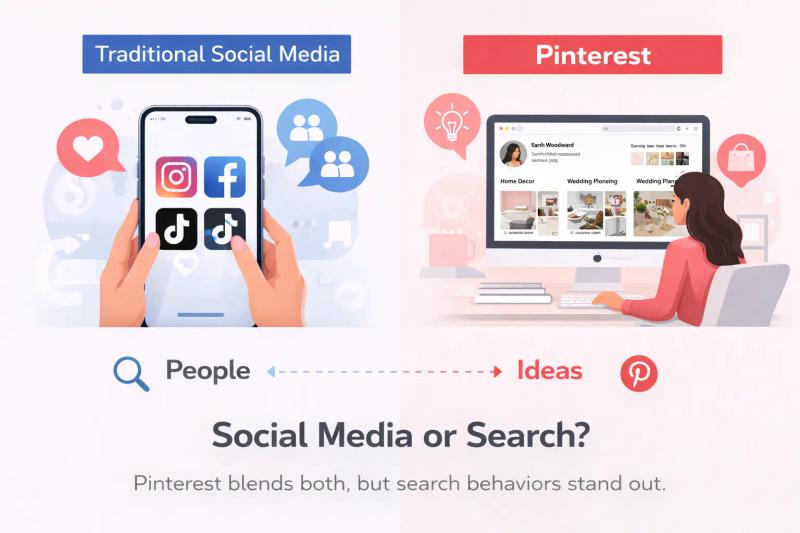
Most social platforms are built around people. Pinterest is built around ideas.
Users type keywords into the search bar instead of scrolling through friend updates. They create boards instead of posting status updates. They save content for later rather than reacting in real time.
Pinterest itself refers to the platform as a “visual discovery engine.” That phrase explains a lot.
According to Statista reports, Pinterest has over half a billion users, with recent figures showing around 570 million monthly active users (MAUs) globally as of early 2025.
What makes those users unique is intent.
A large percentage of people come to Pinterest specifically to plan purchases, research products, or gather inspiration before making decisions.
This is very different from passive scrolling.
Social Platform vs. Search Behavior
On Instagram or TikTok, content usually disappears quickly. Posts trend for a few hours or days. Engagement happens fast and fades fast.
Pinterest content behaves more like search results. A well-optimized pin can drive traffic months or even years after it’s published. That longevity is uncommon on traditional social networks.
This is why many marketers treat Pinterest more like a search engine than a social app.
Keywords matter. Descriptions matter. Relevance matters. Content is indexed and surfaced based on interest signals rather than social connections alone.
The platform blends social features with search mechanics.


Generate pins with AI agent on autopilot
Create, schedule, and grow your Pinterest presence effortlessly with AI-powered automation.
Try GenSumo FreeThe Intent Difference
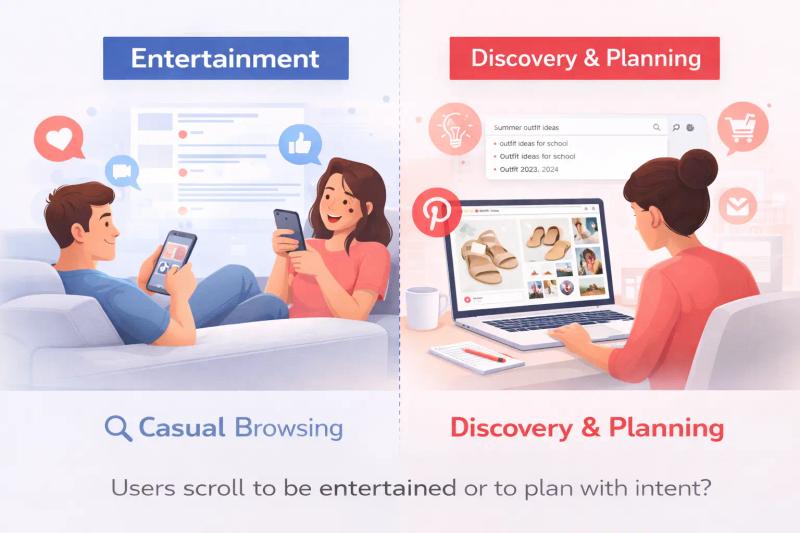
One of the biggest differences between Pinterest and traditional social media is user intent.
On most platforms, users are looking to be entertained or updated.
On Pinterest, users are often looking to solve a problem or make a decision.
That intent-driven behavior leads to stronger commercial impact. Studies shared by the company have consistently shown that Pinterest users are more open to discovering new brands and trying new products compared to users on many other platforms.
In simple terms, people don’t just scroll on Pinterest. They plan.
Why This Distinction Matters
For everyday users, the label may not matter much. But for businesses, creators, and marketers, it changes strategy completely.
If you treat Pinterest like traditional social media, you might focus only on posting frequently or chasing engagement metrics.
If you treat it like a search-driven platform, you focus on creating evergreen content, optimizing for keywords, and building long-term visibility.
That shift often leads to more sustainable traffic and conversions.
So, Is Pinterest Social Media?
Technically, yes. It includes profiles, followers, user-generated content, and interaction features.
Functionally, it behaves more like a visual search engine with social elements layered on top.
It sits somewhere in between.
Pinterest has the structure of social media, but the mindset of its users leans heavily toward discovery and decision-making rather than conversation.
That hybrid identity is exactly what makes it powerful.
Final Thoughts
Pinterest is social media, but not in the traditional sense.
It’s not primarily about broadcasting your life or reacting to trends. It’s about searching, saving, planning, and acting on ideas. That difference explains why content lasts longer, why purchase intent is often higher, and why many brands see Pinterest as both a social platform and a search engine.
If you approach it with that understanding, you’ll use it far more effectively.