



If you’re looking for a BlogToPin alternative, chances are you’re not struggling with volume.
BlogToPin already solves that pretty well.
The real issue usually shows up somewhere else.
The quality of pins. Lack of control over designs. Or just feeling like everything starts to look the same after a point.
That’s where most people start looking for alternatives.
In this post, I’ll share 7 BlogToPin Alternatives tools I’ve tried that solve this problem in different ways.
- Best overall (quality + automation): GenSumo AI → better pin design + full workflow
- Best for pure volume: BlogToPin → still strong if quantity is your only goal
- Best for design control: Sivi AI → more unique visuals, no templates
- Best for templates: Pin Generator → fast but limited flexibility
BlogToPin Alternatives Comparison Table
| Tool | Best For | Pin Creation Quality | Automation | Scheduling | Pricing Starts |
|---|---|---|---|---|---|
| GenSumo AI | All-in-one Pinterest growth | High | Advanced | Yes | $29/month |
| Tailwind | Reliable scheduling | Medium | Good | Yes | $25/month |
| Content Goblin | Blog + content + images | Low | Limited | No | $39/month |
| Pin Generator | Template-based pin creation | High | Good | Yes | $17/month |
| Alura | Etsy sellers | Medium | Good | Yes | ~$20/month |
| Metricool | Multi-platform management | None | Basic | Yes | Free / $25 |
| Sivi AI | AI design generation | High | None | No | Free / $20 |
| Publer | Affordable scheduling | None | Basic | Yes | Free / $12 |
1. GenSumo AI
GenSumo AI solves the biggest limitation most people run into with BlogToPin.
Pin quality.
With BlogToPin, the workflow is fast.
You add URLs, and it generates pins in bulk. But most of the output is quite basic. It usually pulls existing images and adds text overlays, which can feel repetitive and not very polished.
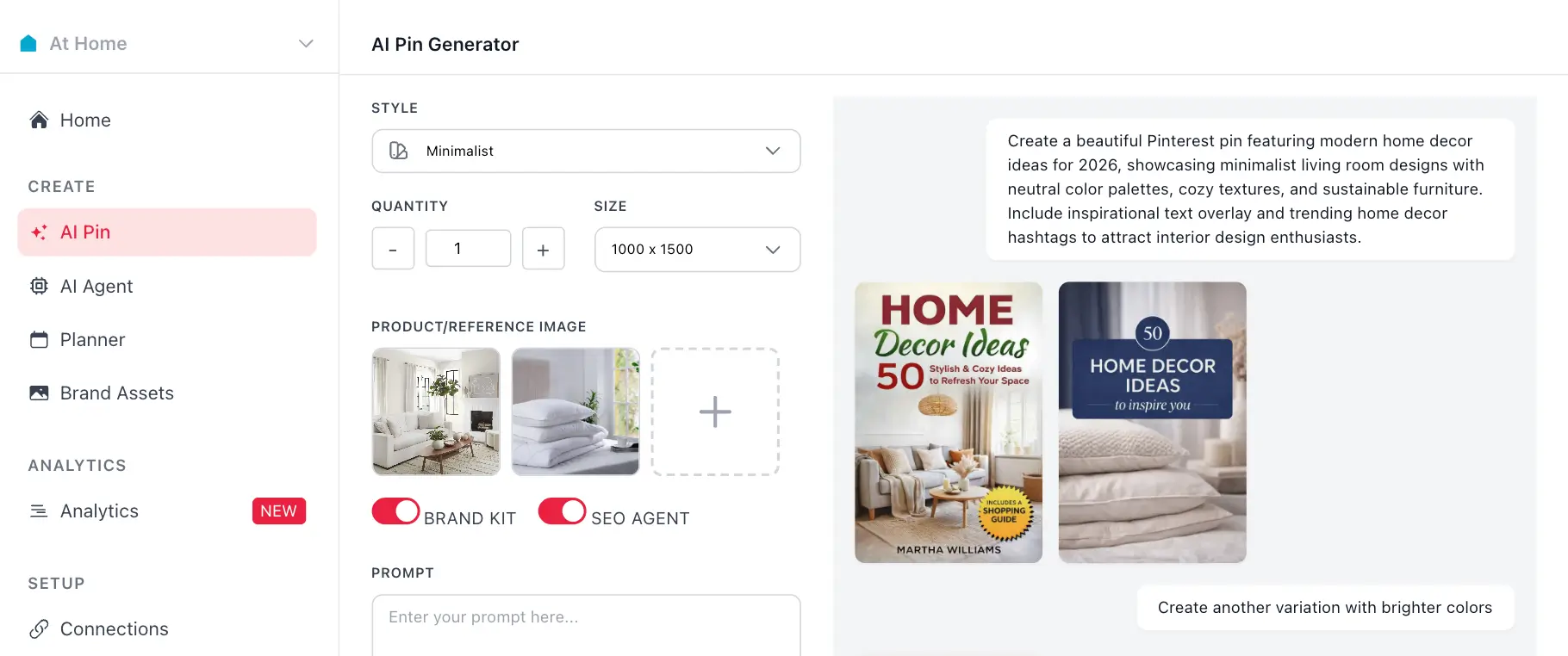
GenSumo takes a different approach.
Instead of just repurposing images, it actually generates full pin designs.
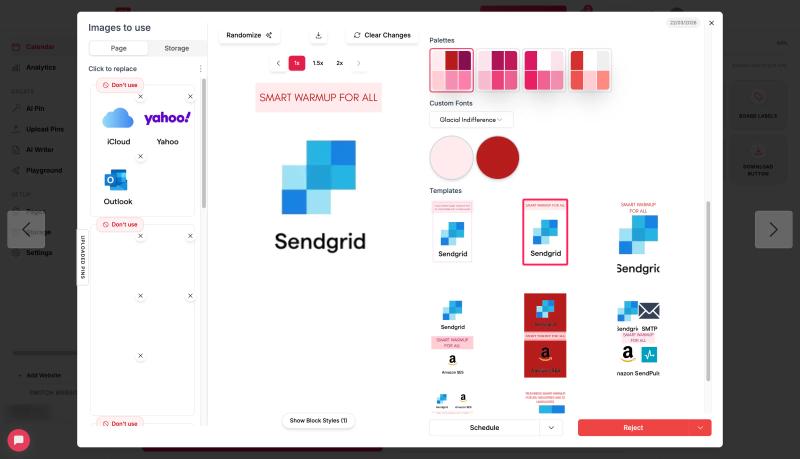
You can describe what you want in simple text, choose your brand style, and it creates multiple variations. The designs feel closer to something you’d make in Canva, not just automated overlays.
And everything is editable.
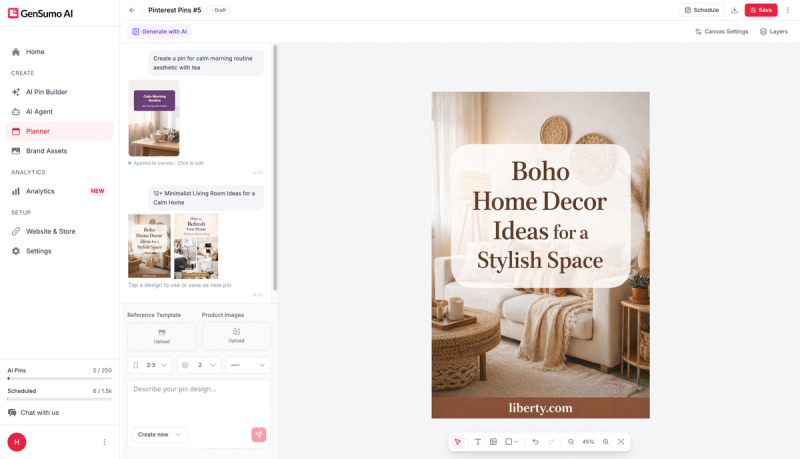
That alone makes a big difference if you care about how your pins look.
On automation, both tools aim for volume, but the approach is different.
BlogToPin focuses on pushing out as many pins as possible from URLs.
GenSumo focuses more on controlled automation.
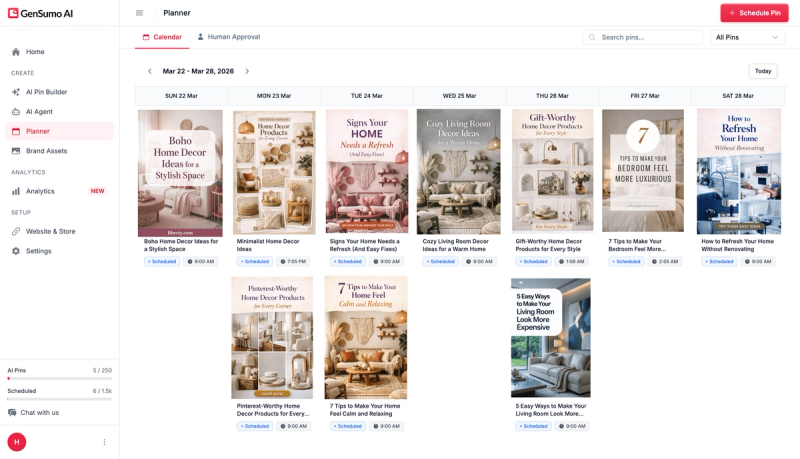
With AI Agents, you can connect your website, generate pins in advance, review them, and then schedule everything automatically. It also handles spacing, posting patterns, and gradual scaling so your account activity looks more natural.
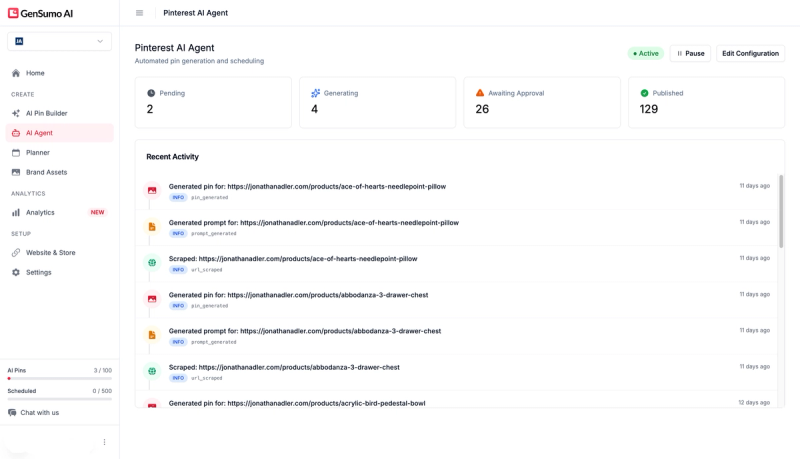
So instead of just “more pins,” it’s more structured growth.
On pricing, BlogToPin starts around $39/month and offers high volume.
GenSumo starts at $29/month with 100 AI pins and 250 scheduled posts.

So you’re getting fewer pins compared to BlogToPin, but significantly better quality and more control over what actually gets published
2. Tailwind
Tailwind is actually what many people end up trying after BlogToPin.
Mainly because it’s been around for a long time and is one of the more established Pinterest tools.
Compared to BlogToPin, Tailwind feels more structured.
You get a proper scheduler, interval posting, board management, and a cleaner workflow for planning content. If your issue with BlogToPin is too much automation without control, Tailwind can feel like a step up.
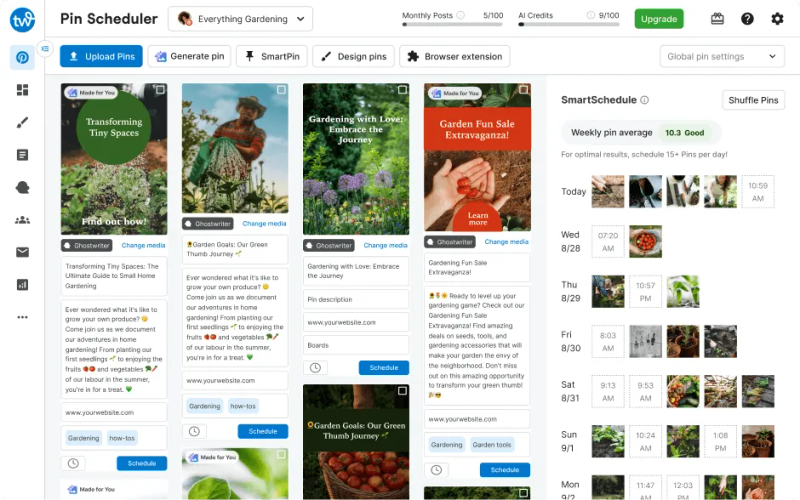
But it comes with its own limitations.
The biggest one is still pin creation.
Tailwind recently added AI pin generation, where you can input a URL and generate pins. But in practice, the output is quite basic. In some cases, it doesn’t even pick up the right context from the page.
So while it’s better than having nothing, it’s not something you can rely on for high-quality designs.
On automation, Tailwind has features like SmartPin, where it generates pins from a URL over time.
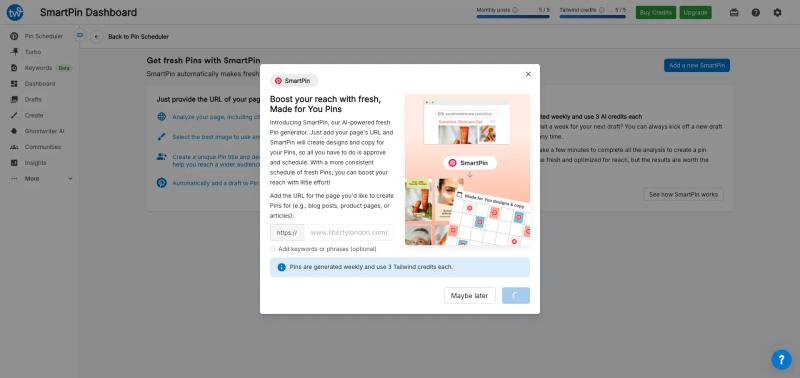
It’s useful, but still fairly limited compared to tools that are built specifically for automation workflows. You don’t get much flexibility in how content is generated or adapted.
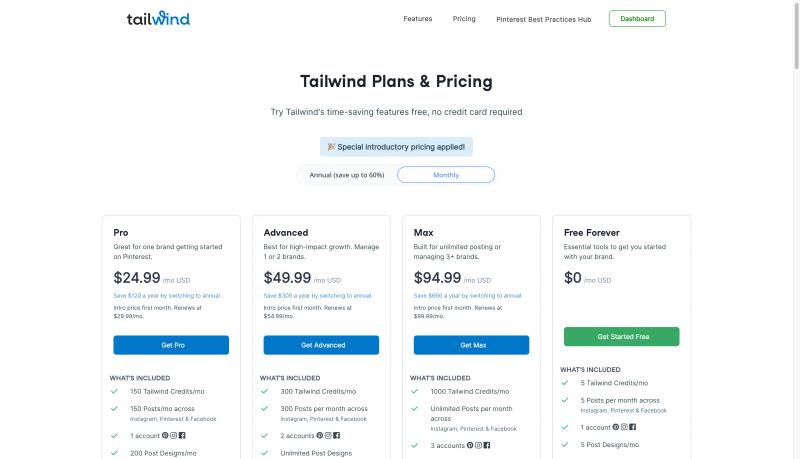
On pricing, Tailwind uses a credit-based system.
Their plan starts around $25/month with 150 credits. Since generating a single AI pin can take multiple credits, the actual output you get is lower than it initially looks.
3. Pin Generator
Pin Generator is probably the closest alternative to BlogToPin in terms of intent.
It’s built for generating pins quickly and at scale.
Like BlogToPin, it focuses on speed. You can create a large number of pins using templates and automate parts of the workflow.
But the approach is slightly different.
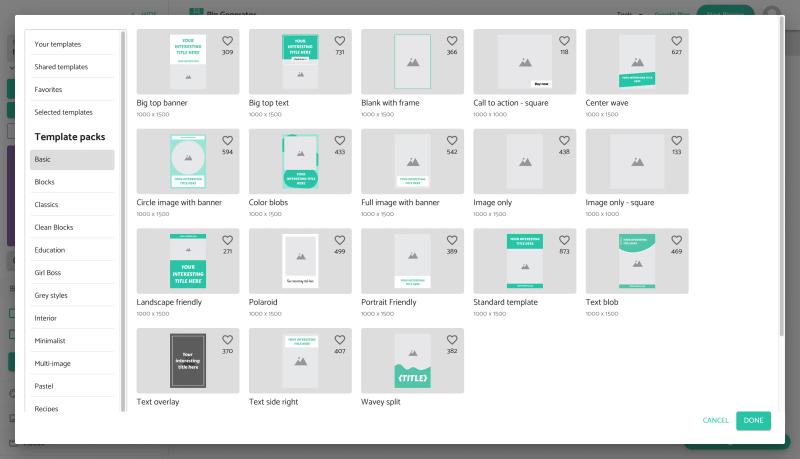
Instead of pulling content and generating pins automatically from URLs, Pin Generator relies heavily on templates.
You choose a design style, apply your content, and generate multiple pins from it.
This gives you a bit more control compared to BlogToPin.
But it also introduces a limitation.
Everything starts to feel templated.
Even though there are many layouts available, after a point, your pins can start looking very similar. Customization is there, but it’s not deep enough to create truly unique designs.
So you’re trading one problem for another.
BlogToPin gives you volume but low-quality outputs. Pin Generator gives you more control, but still within a template system.
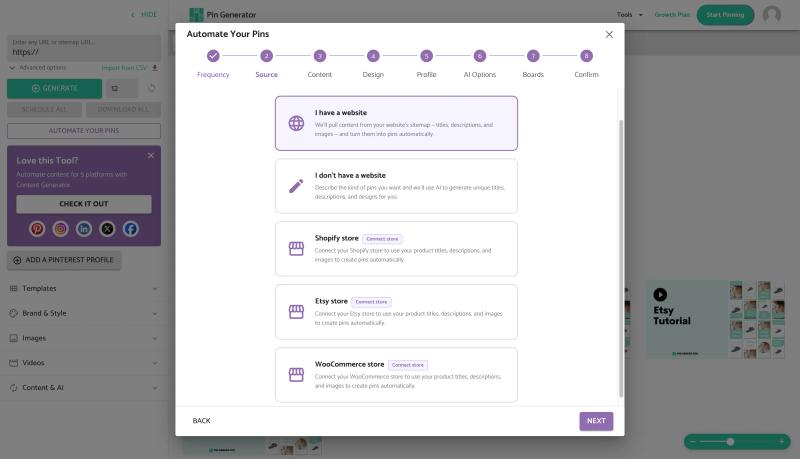
They’ve also added automation recently.
You can connect your store or website and generate pins automatically, which makes it useful for ecommerce or content-heavy workflows.
On pricing, it starts around $17/month with 200 credits, making it one of the more affordable tools.
So if budget is a concern, it’s a solid option.
3. Content Goblin
Content Goblin is a bit different from most Tailwind alternatives.
It’s not just focused on Pinterest. It’s more of a content engine that also happens to generate pins.
The core idea is simple. You enter a topic, and it creates full listicle-style articles with images, headings, and descriptions. Along with that, it can generate Pinterest pins in bulk from the same content.
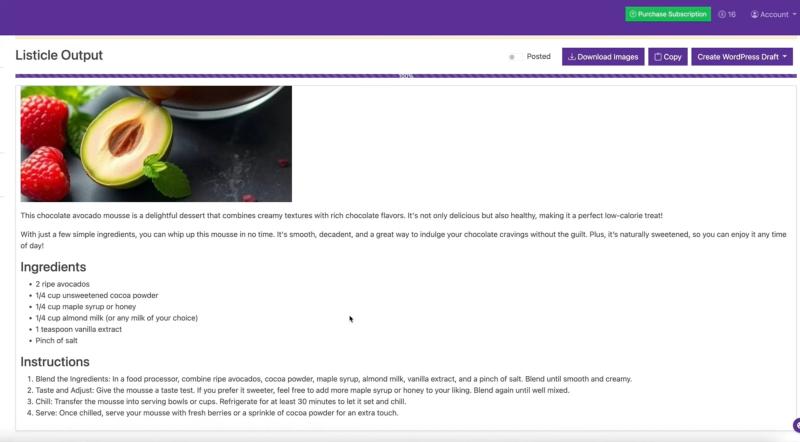
If your workflow is blog-first and Pinterest comes after, this approach makes a lot of sense.
You can go from idea → article → pins in one flow without jumping between tools.
On the pin side though, it’s important to set the right expectation.
It’s not really generating Pinterest-ready pins.
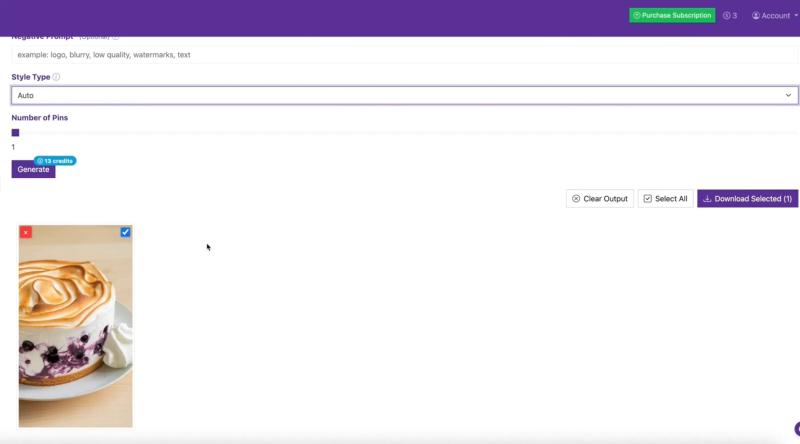
What you get are AI-generated images, similar to what you’d get from tools like ChatGPT or Gemini image generation. There’s no real pin structure, layout, or text overlay built in.
So you still need to take those images and turn them into proper pins yourself.
That’s the tradeoff.
On pricing, it starts around $39/month with a credit-based system.
For example, their base plan gives you around 2900 credits, which translates into a large number of generated images, especially at standard quality.
4. Sivi AI
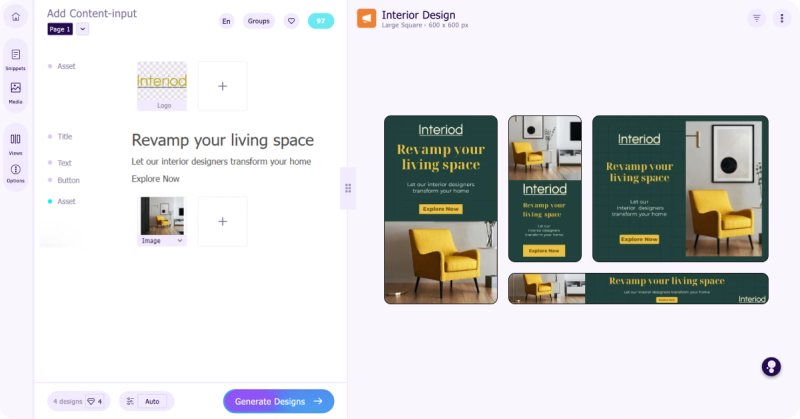
Sivi AI is a very different kind of alternative to BlogToPin.
It doesn’t try to automate everything.
Instead, it focuses purely on design.
With BlogToPin, the main issue is that most pins look basic and repetitive because they’re generated from existing images with simple overlays.
Sivi goes in the opposite direction.
You give it a prompt or some content, and it generates designs from scratch. Not templates. Not reused layouts. Actual new compositions each time.
So the output feels more unique.
If your biggest frustration with BlogToPin is how your pins look, this is where Sivi stands out.
But there’s a clear tradeoff.
There’s no scheduling, no automation, no posting workflow.
You’re only solving one part of the problem, which is design.
And even within design, you don’t get full control like a tool such as Canva. You might need a few iterations to get something usable.
So the workflow becomes:
Generate in Sivi → export → schedule somewhere else
Where it fits best is when you care about visual quality more than volume.
On pricing, it has a free plan, and paid plans start around $20/month depending on usage.
So it’s relatively accessible if you just want to improve your pin designs.
5. Publer
Publer is another alternative, but in a very different category.
It’s not trying to replace BlogToPin’s pin generation.
It’s focused on scheduling.
If you’ve been using BlogToPin and feel like the automation is too rigid or you want more control over when and how things get published, Publer can be a good shift.
You get a clean scheduling system.
Features like bulk upload, RSS-based posting, post recycling, and a visual calendar make it easy to plan content across platforms.
It’s also not limited to Pinterest.
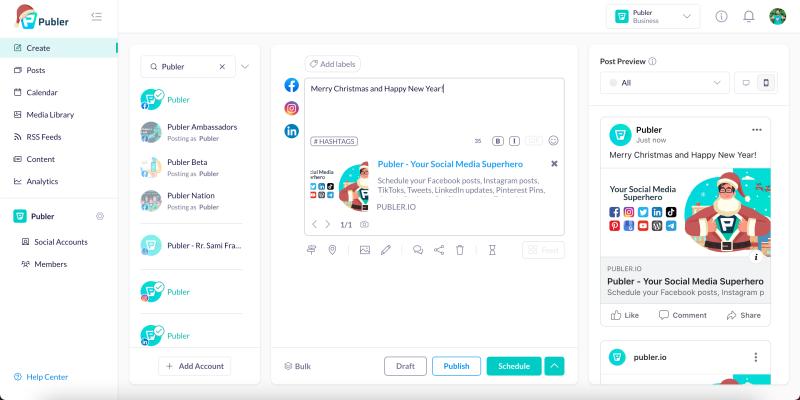
You can manage multiple social channels from the same place, which is useful if you’re distributing content beyond just Pinterest.
But there’s a clear limitation.
It doesn’t help you create pins.
No AI pin generation, no design system, no automation around turning blog posts into pins.
So you’ll still need another tool for that part.
Where Publer works well is when you already have your pins ready and just want a reliable way to publish consistently.
On pricing, it has a free plan and paid plans start around $12/month, making it one of the more affordable options.


Generate pins with AI agent on autopilot
Create, schedule, and grow your Pinterest presence effortlessly with AI-powered automation.
Try GenSumo Free6. Alura

Alura is primarily built for Etsy sellers, and that context matters.
Pinterest is not its main focus, but it does include a pin generation feature that works directly with your Etsy listings.
The setup is simple.
You connect your store, and it turns your product listings into pins automatically. Titles, images, and descriptions are pulled in without much effort, which makes it very easy to get started.
Compared to BlogToPin, it feels more focused.
Instead of trying to handle all types of content, it’s specifically optimized for product-based workflows.
That makes it quite useful if your goal is to consistently promote Etsy listings without spending time on manual pin creation.
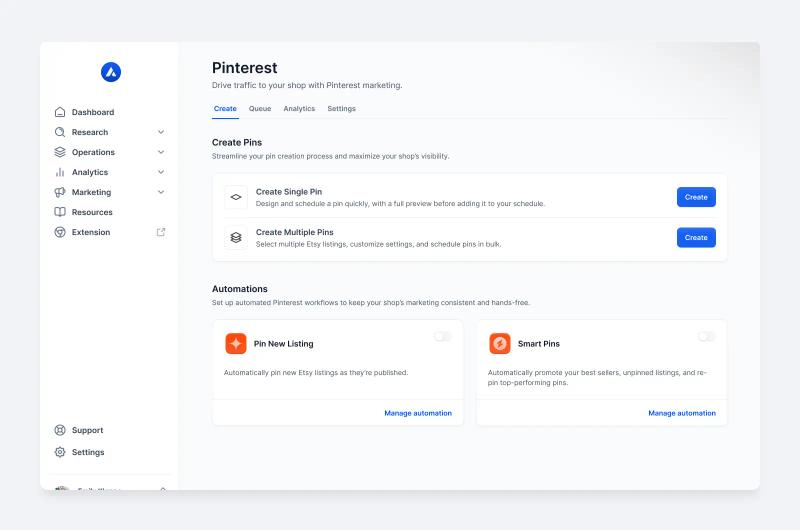
On the design side, it keeps things straightforward.
You don’t get deep customization or advanced design controls, but for many sellers, that’s actually a benefit. It removes the need to think too much about layouts and lets you focus on getting your products out there.
Where it works well is simplicity and speed.
7. Metricool
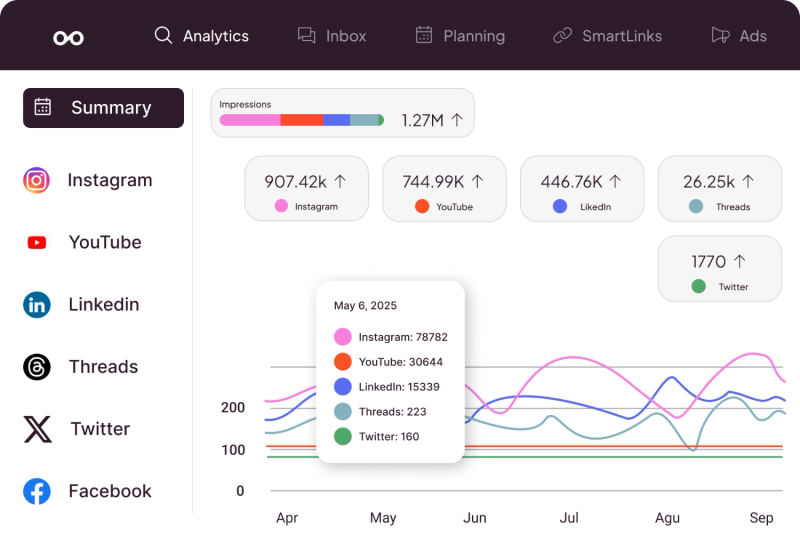
Metricool sits in a similar space as Publer, but leans more into analytics.
It’s a full social media management tool, not a Pinterest-specific platform.
So if you’re using BlogToPin but feel like you don’t have enough visibility into what’s working, Metricool can fill that gap.
You get scheduling, content planning, and a fairly strong analytics dashboard.
It tracks performance across platforms, shows trends over time, and gives you a clearer picture of which posts are actually driving results.
That’s something BlogToPin doesn’t really focus on.
But like Publer, creation is missing.
There’s no pin generation, no design system, and no automation for turning blog content into pins.
So again, you’re solving a different problem.
Where Metricool stands out is reporting.
If you’re managing multiple accounts or clients, having everything in one dashboard can be useful.
On pricing, it has a free plan, and paid plans start around $25/month depending on usage.
Final Thoughts
BlogToPin works well if your focus is volume.
But as you scale, quality and control start to matter more.
That’s where most alternatives come in. Some improve design, some improve scheduling, but very few handle the full workflow.
If you want something that covers creation, automation, and publishing together, GenSumo AI is closer to that direction.
FAQs
What is the best BlogToPin alternative?
If you want better pin quality and more control, GenSumo AI is a strong alternative since it combines design, automation, and scheduling.
If you just want scheduling, tools like Publer or Metricool are enough.
Is BlogToPin still worth using?
Yes, especially if your goal is volume.
But if you start caring about design quality or branding, you may outgrow it.
Which tool is best for beginners?
Publer and Metricool are easy to start with.
If you want something that also helps with design and automation from the start, GenSumo AI is a better option.
Can I fully automate Pinterest with these tools?
To an extent, yes.
Tools like BlogToPin and GenSumo AI offer automation, but the level of control and quality varies.
Fully hands-off usually comes with tradeoffs in quality